-
Shop
- Adidas
- Advanced Technologies
- AI Skills Mastery 2026 Collection
- Apple Accessories
- Armani
- Best-Sellers
- Calvin Klein
- Car Accessories
- Clothing
- Dating & Social Skills
- Digital Resources
- Beauty
- Budgeting & Saving
- Car Buying & Ownership
- Cozy Feast Collection
- Emotional Intelligence
- Entrepreneurship & Business Growth
- Financial Education
- Financial Independence
- Financial Mindset & Psychology
- Goal Setting
- Hobbies
- Leadership
- Mindfulness
- Motivation
- Parenting & Child Development
- Personal Style & Fashion
- Pet Lifestyle & Wellness
- Positive Thinking
- Self Confidence
- Sleep Improvement
- Stress Management & Relaxation
- Travel Planning
- Yoga & Fitness
- Yoga & Mind-Body Practices
- Education & Learning
- Family & Parenting
- Fashion
- Accessories
- Alexander McQueen
- Bags
- Bags & Wallets
- Balenciaga
- Belts
- Blazers
- Blouses & Shirts
- Bottega Veneta
- Brunello Cucinelli
- Burberry
- Chanel
- Chloé
- Dior
- Dolce & Gabbana
- Dresses
- Etro
- Fendi
- Gucci
- Hats & Hair Accessories
- Hoodies & Sweatshirts
- Jacquemus
- Jewelry
- Jil Sander
- Jimmy Choo
- Kiton
- Luggage
- Luggage Bags
- Miu Miu
- Off-White
- Prada
- Rick Owens
- Saint Laurent
- Scarves
- Shoes
- Socks & Tights
- Sunglasses
- Sweaters & Cardigans
- The Row
- Tom Ford
- Tops & Shirts
- Valentino
- Valentino Garavani
- Versace
- Vivienne Westwood
- Watches
- Fashion Accessories
- Gadgets
- Guess
- Health & Beauty
- Health & Wellness
- Home & Garden
- Home Supplies
- Kids & Babies
- Kitchen Best-Sellers
- Luxury Brands Collection
- Nike
- Online Business for Beginners
- Patio, Lawn & Garden
- Personal Growth
- Pet Care
- Pet Supplies
- Pets
- Smart Home Living Guides
- Sport & Outdoors
- Super Deals
- TikTok Growth & Monetization Mastery
- Travel
- Wealth
- Wealth Building
- Popular
- Best deals
Genuine Leather Belt & Solid Brass Buckle: Fit & Care
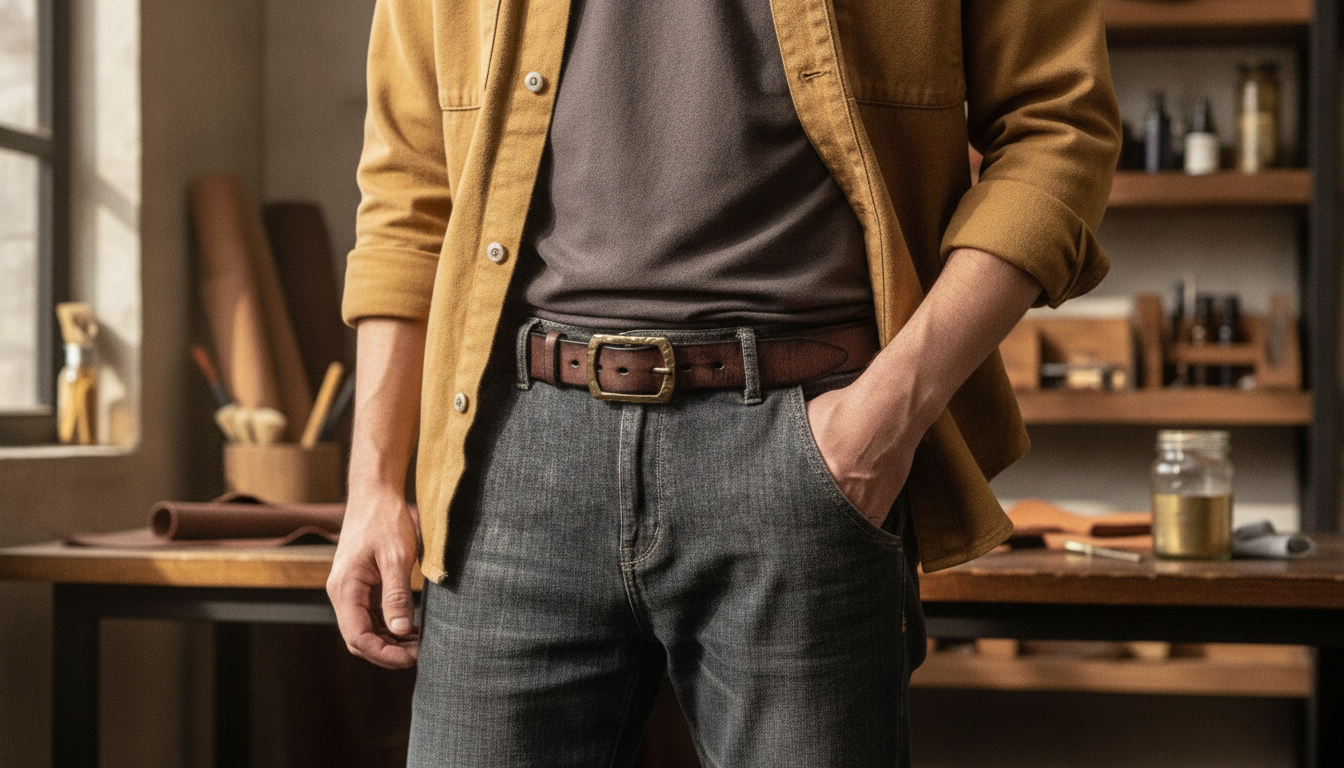
Men’s Genuine Leather Belt with Solid Brass Buckle: Everyday Durability with a Classic Finish
A well-made belt is one of the most-used pieces in a wardrobe: it holds shape, elevates outfits, and needs to stand up to daily wear. Choosing a genuine leather belt paired with a solid brass buckle is a practical way to get long-term reliability without drifting into overly formal territory. Below is what to look for in leather and brass, how to dial in sizing, and how to keep both the strap and hardware looking better over time.
Why leather and brass make a dependable daily belt
Leather-and-brass is a time-tested combination because it’s built for repeat use and minor abuse—think commuting, long workdays, and frequent on/off at airports or restaurants.
- Genuine leather balances durability and flexibility. A quality strap should feel supportive without feeling stiff, and it typically becomes more comfortable as it breaks in.
- Solid brass holds up in real-world conditions. Brass is known for resisting corrosion and won’t flake like many plated finishes can after months of friction.
- Classic styling stays versatile. Leather with a brass buckle looks at home with denim, chinos, and business-casual outfits, adding polish without calling attention to itself.
- Structure helps the belt keep its shape. A sturdier strap and buckle reduce the curling and uneven stretching that can make a belt look tired early.
What “solid brass buckle” means in practical terms
“Solid brass” generally means the buckle is brass through-and-through, rather than a thin cosmetic layer on top of a different base metal. That difference shows up over time—especially at the corners and contact points where belts see the most wear.
- It’s one metal throughout. When a buckle is solid brass, it’s less likely to reveal an underlying color if it gets scratched.
- Patina is normal (and often desirable). Brass naturally darkens and warms with exposure to air and moisture; some people prefer that aged look, while others polish for shine.
- Humidity-friendly hardware. For warm or coastal climates, brass is a dependable choice that tends to resist the spotty corrosion common on cheaper alloys.
- Finish details still matter. Look for smooth edges, a clean prong, and secure attachment points so the buckle doesn’t snag belt loops or grind into the leather near the fold.
For general leather upkeep and do’s/don’ts, this overview is a helpful reference: Leather care basics (general guidance).
Sizing and fit: getting the belt length right
Fit is what separates a belt that looks intentional from one that looks like an afterthought. The goal is a comfortable closure on the middle holes with a neat tail end—enough length to tuck into the first belt loop, but not so much that it wraps halfway around your waist.
- Start with a simple rule. A common approach is selecting a belt size about 1–2 inches larger than your typical pant waist size, though brand sizing can vary.
- Target the middle holes. If the prong lands on a middle hole, you can loosen after a big meal or tighten slightly when layering in cooler months.
- Measure a belt you already like. Measure from the fold at the buckle (where the strap bends) to the hole you use most; that measurement is often the closest match.
- Check width and hole spacing. Jeans often have wider loops than dress slacks, and a belt that’s too wide can bunch or rub.
Quick fit check for a comfortable, balanced look
| If the prong lands on… | What it suggests | What to do next |
|---|---|---|
| First hole (tightest) | Belt is likely too long | Consider one size down or add holes only as a last resort |
| Middle holes | Best overall fit range | Keep this size; it allows small adjustments |
| Last hole (loosest) | Belt may be too short | Size up to avoid stress on leather and buckle |
If you want a visual walkthrough for measuring, this consumer sizing guide is a useful companion: How to measure for a belt (consumer sizing guidance).
Everyday wear: office, casual, and travel
The best everyday belt is the one that works across most of your week. Leather with a brass buckle is especially good at bridging settings without needing multiple “specialty” belts.
Care and maintenance that extends belt life
Featured option: Men’s Genuine Leather Belt with Solid Brass Buckle
If you’re looking for a straightforward daily belt built around classic materials, the Men’s Genuine Leather Belt with Solid Brass Buckle is a practical pick. It’s priced at $40.82 (USD) and currently in stock, making it an easy upgrade for workdays, weekends, and travel.
More in-stock picks worth a look
- Elegant Autumn Short Blazer for Women (in stock): A structured layering piece that pairs well with clean leather accessories for a polished look.
- Premium Lens Guards for Insta360 X5 – High Transparency Tempered Glass Protector (in stock): A practical add-on for travel or daily carry when your belt is doing the job of organizing pockets and gear.
Common mistakes to avoid when buying a leather belt
FAQ
Does solid brass tarnish over time?
Yes. Brass naturally develops patina with exposure to air and moisture. You can leave it for an aged look or polish it occasionally to bring back a brighter finish.
How should a men’s belt fit for everyday comfort?
Ideally the prong fastens on a middle hole, with enough tail to tuck neatly into a belt loop. If it only fits on the first or last hole, sizing up or down usually creates a more comfortable, balanced fit.
How often should a leather belt be conditioned?
Condition when the leather looks dry or feels stiff—often every few months for frequent wear. Avoid conditioning too often, since overly soft leather can attract dirt and lose structure.
Recommended for you
Dog Crate TV Stand with Drawers: Space-Saving Fit
Jun 23, 2026










Leave a comment