-
Shop
- Adidas
- Advanced Technologies
- AI Skills Mastery 2026 Collection
- Apple Accessories
- Armani
- Best-Sellers
- Calvin Klein
- Car Accessories
- Clothing
- Dating & Social Skills
- Digital Resources
- Beauty
- Budgeting & Saving
- Car Buying & Ownership
- Cozy Feast Collection
- Emotional Intelligence
- Entrepreneurship & Business Growth
- Financial Education
- Financial Independence
- Financial Mindset & Psychology
- Goal Setting
- Hobbies
- Leadership
- Mindfulness
- Motivation
- Parenting & Child Development
- Personal Style & Fashion
- Pet Lifestyle & Wellness
- Positive Thinking
- Self Confidence
- Sleep Improvement
- Stress Management & Relaxation
- Travel Planning
- Yoga & Fitness
- Yoga & Mind-Body Practices
- Education & Learning
- Family & Parenting
- Fashion
- Accessories
- Alexander McQueen
- Bags
- Bags & Wallets
- Balenciaga
- Belts
- Blazers
- Blouses & Shirts
- Bottega Veneta
- Brunello Cucinelli
- Burberry
- Chanel
- Chloé
- Dior
- Dolce & Gabbana
- Dresses
- Etro
- Fendi
- Gucci
- Hats & Hair Accessories
- Hoodies & Sweatshirts
- Jacquemus
- Jewelry
- Jil Sander
- Jimmy Choo
- Kiton
- Luggage
- Luggage Bags
- Miu Miu
- Off-White
- Prada
- Rick Owens
- Saint Laurent
- Scarves
- Shoes
- Socks & Tights
- Sunglasses
- Sweaters & Cardigans
- The Row
- Tom Ford
- Tops & Shirts
- Valentino
- Valentino Garavani
- Versace
- Vivienne Westwood
- Watches
- Fashion Accessories
- Gadgets
- Guess
- Health & Beauty
- Health & Wellness
- Home & Garden
- Home Supplies
- Kids & Babies
- Kitchen Best-Sellers
- Luxury Brands Collection
- Nike
- Online Business for Beginners
- Patio, Lawn & Garden
- Personal Growth
- Pet Care
- Pet Supplies
- Pets
- Smart Home Living Guides
- Sport & Outdoors
- Super Deals
- TikTok Growth & Monetization Mastery
- Travel
- Wealth
- Wealth Building
- Popular
- Best deals
Sandalwood 2-in-1 Scalp Comb & Gua Sha Massage Tool
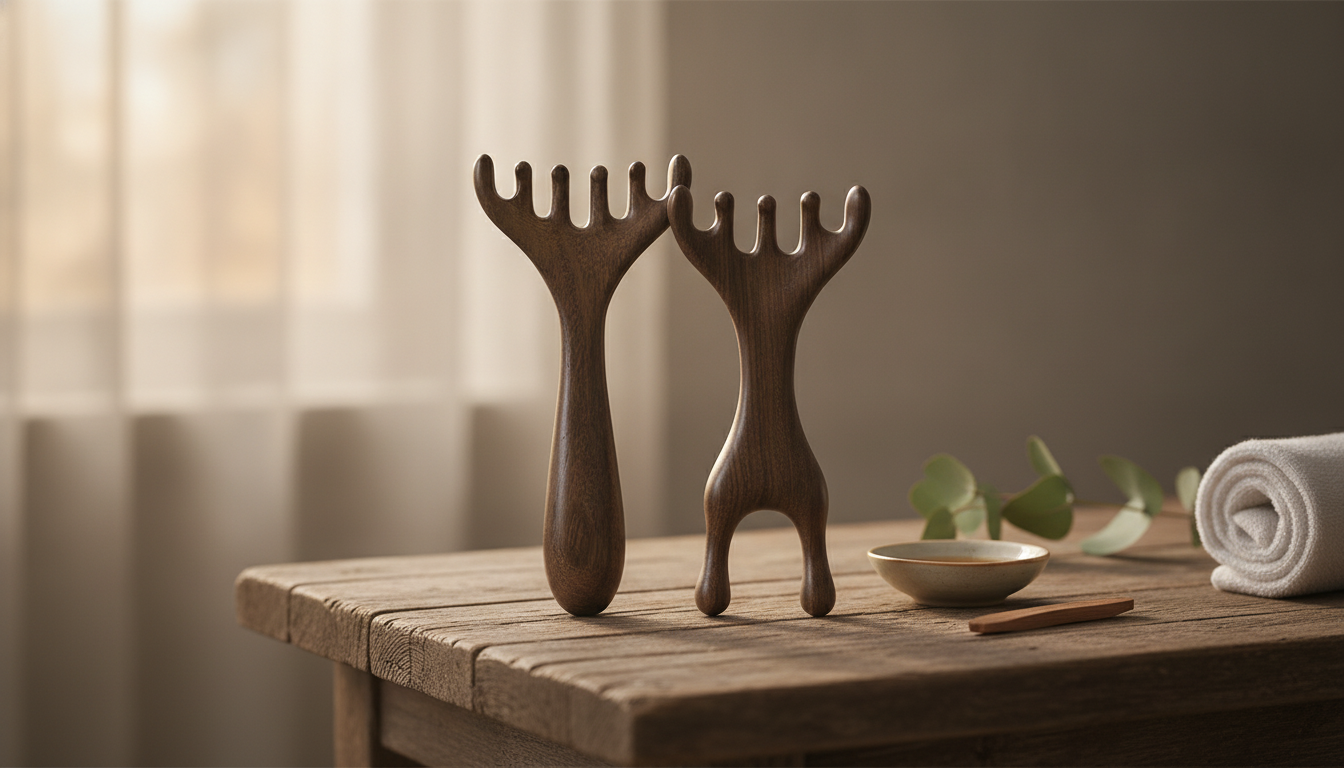
Natural Sandalwood Six-Claw Scalp & Body Massage Comb with Gua Sha Function
A compact sandalwood massage tool that combines a six-claw comb for scalp stimulation with a smooth gua sha edge for neck, shoulders, and body. Designed for quick daily use at home, at a desk, or after workouts, it helps ease tension and supports a relaxing self-care routine—without needing a drawer full of separate tools.
What It Is and How the 2-in-1 Design Works
This handheld tool is built around a simple idea: switch sides depending on what your body needs in the moment. One side focuses on gentle, targeted scalp stimulation, while the other side offers a smooth edge for slow, gliding strokes across common tension zones.
- Six-claw comb side: intended for gentle scalp and hairline massage to help relax the scalp and encourage a soothing sensation.
- Gua sha edge: a smooth, curved side used for gliding strokes on the neck, jawline, shoulders, arms, and legs.
- Sandalwood body: a comfortable grip, naturally aromatic wood character, and a warm-to-the-touch feel compared with many metal tools.
- Simple routine: alternate short scalp passes with a few gua sha sweeps on tension-prone areas.
Comb Side vs. Gua Sha Side: Common Uses
| Tool Side | Best For | Suggested Pressure | Typical Duration |
|---|---|---|---|
| Six-claw comb | Scalp, hairline, temples (avoiding eye area) | Light to medium | 1–3 minutes |
| Gua sha edge | Neck, shoulders, jawline, forearms, calves | Light at first, then medium as tolerated | 3–8 minutes |
| Either side | Quick stress reset at desk or before bed | Light | 30–90 seconds |
Benefits for Scalp, Face, and Body Relaxation
Used consistently (and comfortably), a small massage tool can become a reliable “reset button” during busy days. The goal isn’t intensity—it’s steady, repeatable touch that helps the body settle.
- Promotes relaxation: pairing rhythmic scalp stimulation with slow gua sha-style strokes can feel calming, especially when matched with slower breathing.
- Helps ease the feeling of tightness: many people carry tension in the neck and shoulders after screens, driving, or workouts; gentle strokes can help those areas feel less “stuck.”
- Supports mindful body care: unhurried movements can encourage a more grounded self-care routine rather than a rushed, high-pressure massage.
- Flexible use: use dry, or apply a small amount of oil/lotion on body areas for easier glide (avoid oily use on the scalp if hair gets greasy easily).
For general guidance on massage benefits and safety, see the National Center for Complementary and Integrative Health (NCCIH). If you’re specifically interested in gentle, directional strokes and when to avoid them, the Cleveland Clinic overview on lymphatic drainage massage is also a helpful reference for safety considerations.
How to Use: Quick Routines (Morning, Midday, Night)
These short routines are designed to fit into real life: a couple of minutes before work, a brief desk break, or a longer wind-down after a shower or workout. Keep pressure comfortable—never painful.
Morning (2–4 minutes)
- Use light comb strokes from the hairline back toward the crown.
- Finish with a few neck sweeps using the gua sha edge (glide downward/outward, not harshly upward).
Midday reset (1–2 minutes)
- Do a brief temple/scalp pass with the six-claw side.
- Then glide along the trapezius area from the neck outward toward the shoulders for a quick “unclench” moment.
Evening wind-down (5–10 minutes)
- Apply a thin layer of body oil or lotion to the neck/shoulders for slip.
- Use slow, consistent strokes with the gua sha edge; keep pressure comfortable and never painful.
- If the area feels tender, reduce pressure and shorten the session.
Face/jawline note
- Use very light pressure and short strokes only.
- Avoid broken skin and active irritation.
- Stay away from the delicate eye area.
Technique Tips for Comfort and Better Glide
- Start lighter than expected: increase pressure only after the area warms up and feels comfortable.
- Angle matters: keep the gua sha edge nearly flat against the skin to avoid pinching.
- Slow pace wins: aim for smooth, controlled passes rather than quick scraping motions.
- Direction cues: on neck and shoulders, glide outward and downward with gentle, repeatable strokes.
- Stop if discomfort spikes: sharp pain, bruising, or worsening irritation is a sign to reduce pressure or pause.
Care, Cleaning, and Storage for Sandalwood Tools
Who It’s Best For (and When to Avoid Use)
Product Snapshot and At-a-Glance Details
If you want one small tool for both scalp stimulation and body-focused gliding strokes, Natural Sandalwood Six-Claw Scalp & Body Massage Comb with Gua Sha Function is an easy addition to a nightstand or work bag. For a simple “refresh and reset” routine, pair it with a few minutes of stretching, water, and a short walk.
If you’re also updating everyday essentials, consider browsing Men’s Genuine Leather Belt with Solid Brass Buckle or layering pieces like the Elegant Autumn Short Blazer for Women for a polished, put-together look after the gym or office.
At a Glance
| Detail | Value |
|---|---|
| Product | Natural Sandalwood Six-Claw Scalp & Body Massage Comb with Gua Sha Function |
| Price | 3.51 USD |
| Stock | 600 |
| Primary functions | Scalp massage + gua sha-style body strokes |
| Material | Sandalwood (wooden tool) |
FAQ
Can the gua sha side be used on the face?
Yes—use very light pressure and short strokes, and avoid broken skin, active acne irritation, and the delicate eye area. A small amount of facial oil can improve glide; stop if redness persists.
How often can a scalp massage comb be used?
Most people can use it daily for a few minutes as long as pressure stays gentle. If your scalp becomes tender or irritated, reduce frequency and lighten your touch.
Does sandalwood require special cleaning?
It doesn’t need complicated care, but it should not be soaked. Wipe with a slightly damp cloth and dry immediately; if you use oils, remove residue right away to keep the surface smooth.
Recommended for you

Pick the Right Pet: Match Time, Space, and Budget
Jun 17, 2026










Leave a comment